










 Sponsored
Sleep & RecoveryStressCircadian Health
Wired and Exhausted At The Same Time? 10 Signs Your Sleep Is Quietly Broken.

Last updated: June 15th, 2026 · 4 min read
TLDR: Most people dismiss the early signs of broken sleep as stress, busy season, or "just life." They aren't. The decline starts as soon as you stop being able to downshift at night — and quietly compounds for years before it forces the issue. The signs below are the ones to take seriously now — and what to do about them.
-
1 😴
1. You Sleep 8 Hours and Still Wake Up Tired
The clock says eight. Your body says four. Something is off.
Hours in bed aren't the same as restorative sleep. If you're not reaching deep sleep stages, the night was a long shallow drift — not a recovery cycle.
Your body knows the difference even when the data doesn't.
-
2 ⏰
2. 3am Wake-Ups That Won't Let You Fall Back
Sleep was fine. Then you're suddenly awake at 3am, mind racing, body wired.
This is a cortisol problem disguised as a sleep problem. The stress hormone that's supposed to peak in the morning is spiking at the wrong time of night.
The fix isn't more sleep aids. It's resetting the rhythm.
-
3 🧠
3. Your Mind Races The Moment You Hit The Pillow
You can't think clearly at 3pm. But at 10pm, every meeting from the week shows up uninvited.
When your nervous system can't downshift from sympathetic to parasympathetic, sleep becomes a fight. Your body needs to feel safe before it lets you go — and modern life doesn't give it that signal.
-
4 🍷
4. You Need Wine or Weed to Switch Off
Without a glass of wine, an edible, or a screen running, you can't transition out of work mode.
If you're medicating your way to relaxation every night, your nervous system has lost the ability to do it on its own. That's not a willpower problem — it's a regulation problem.
-
5 📱
5. Your Phone Is The Last Thing You Touch At Night
You're scrolling at midnight even though you have to be up at 6. The blue light, the dopamine hits, the inability to put it down — all working against your sleep architecture.
Late-night screen time suppresses melatonin, fragments REM, and rewires your reward system. The damage isn't the next morning — it's the next month.
-
6 🛌
6. Mornings Are Dragged Out of Bed, Not Woken Up
Snooze, snooze, snooze. You're not waking up rested — you're hitting the off switch on an alarm because you have to be somewhere.
When the sleep cycle is broken, the morning cortisol surge that should pull you out of bed is muted. You wake up at the bottom of the curve, not the top.
-
7 😩
7. Weekend Lie-Ins Don't Catch You Up
You slept till noon. You feel just as groggy. Sleep debt doesn't work the way most people think it does.
You can't pay back chronically broken sleep cycles with a single long sleep. The architecture has to be repaired night-by-night — not banked.
-
8 ⚡
8. Anxiety Spikes In The Afternoon or Evening
You're fine at 9am. By 4pm, you're on edge. By bedtime, your heart's racing.
Cortisol dysregulation runs the wrong rhythm — high when it should be low, low when it should be high. The body lives in fight-or-flight when it should be downshifting.
-
9 🌙
9. You Can't Remember The Last Time You Dreamed
Vivid dreams are a marker of REM sleep. When REM is fragmented or suppressed, the dreams stop — and so does the deep cognitive processing that goes with them.
Less dreaming means less memory consolidation, less emotional processing, less of the housekeeping the brain does at night. The fog you feel by day starts in the sleep you didn't get.
-
10 🔌
10. You Feel Wired But Tired By The End Of The Day
Exhausted. But you can't actually rest. The body wants sleep but the nervous system won't let you reach it.
This is the signature of chronic adrenal dysregulation. Cortisol stays elevated past its window. Your body never fully shifts from 'do' to 'rest.'
Every night becomes a fight to come down.
If you made it this far, it means one thing:
You're not willing to accept broken sleep as the new normal.
Most people brush off the first few signs as stress, busy season, or 'getting older.' By the time the rest of the list shows up, the cycle has been compounding for years.
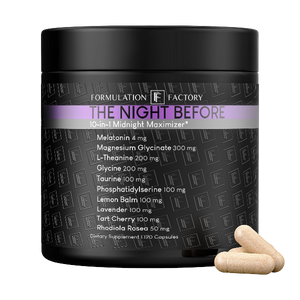
That's why we built The Night Before — a full-dose protocol designed to support cortisol regulation, nervous-system downshift, deep-sleep restoration, and circadian repair. The system, not the symptom.
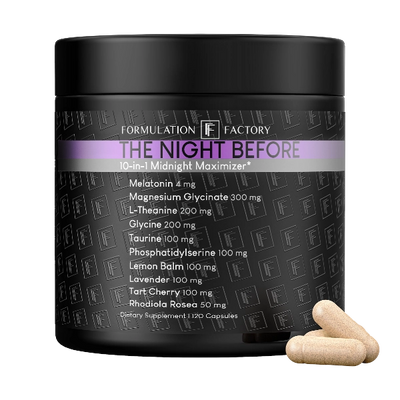
Reset your rhythm. Reclaim your rest.
Clinically-dosed protocol targeting the upstream causes of broken sleep — cortisol regulation, nervous-system downshift, deep-sleep restoration, and circadian repair.
Try It Now →✓ 100-day money-back guarantee · Free shipping
"Finally sleeping again. Two weeks in."
Still Not Sure? Here Are The Top Questions We Get About The Night Before
Will this work even if my sleep is broken because of stress?
Is it a sleeping pill?
Can I take it with melatonin or other supplements?
Who is it for?
How do I take it?
How long until I see results?
Will it make me groggy in the morning?
Does it help with falling asleep, staying asleep, or both?
Do I need to cycle off it?
Do I need a subscription?
What's the 100-day guarantee?
Is it habit-forming?