
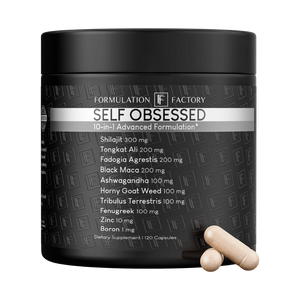
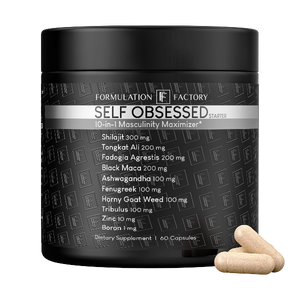
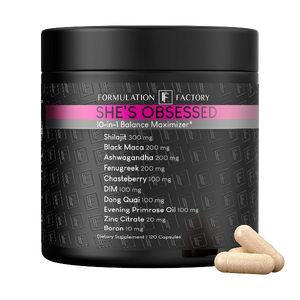
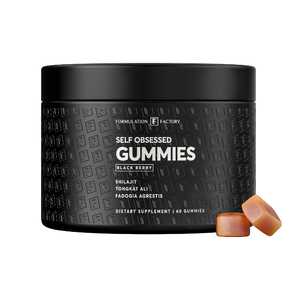
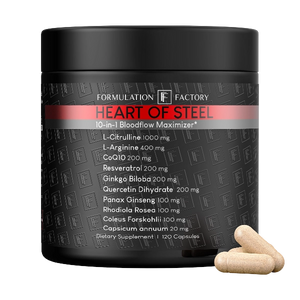
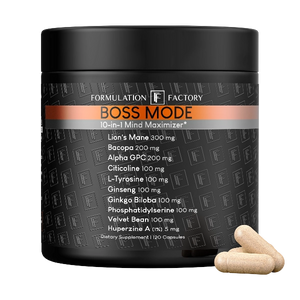
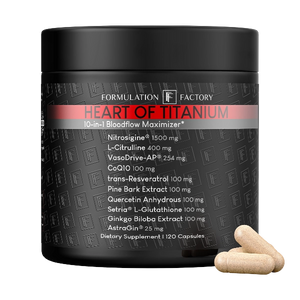
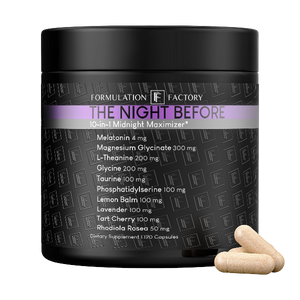
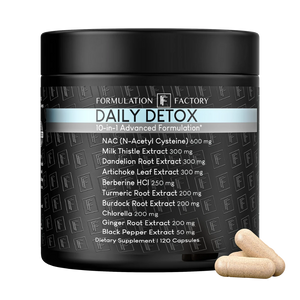
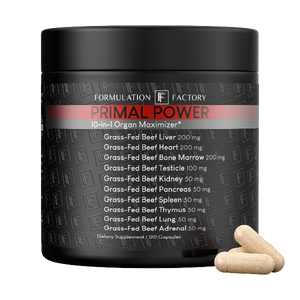
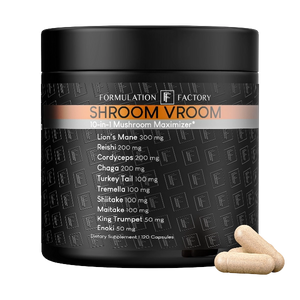


A good mechanic doesn't grab random parts because the packaging looks impressive. They know exactly what each component does, at what tolerance, and why it belongs in the build. Your supplement stack deserves the same standard.
At Formulation Factory, we treat ingredients as tools. Some build the foundation. Some support the process. And some are just taking up space. Here's how to tell the difference.
Here is how to audit your supplement cabinet like a pro.
Tier 1: Foundation Builders (Keep These)
Before we get into the ingredients, here's one thing worth understanding: not all testosterone in your body is available for use. A protein called SHBG ( Sex Hormone-Binding Globulin) latches onto testosterone in your bloodstream and locks it up.
Only the testosterone that isn't bound to SHBG, what's called free testosterone, is the portion your body can actually use. So your total testosterone number on a lab report can look fine while your free testosterone is low. That's why several of the best ingredients don't focus on producing more testosterone, they focus on freeing up what's already there.
- Shilajit (200–500 mg) — Reduces SHBG, which increases the amount of free testosterone your body can actually put to use.
- Tongkat Ali (200–400 mg) — Works the same way, inhibiting SHBG while also lowering cortisol. High cortisol suppresses testosterone production, so tackling both at once makes this one of the more efficient ingredients in the category.
- Fenugreek (500–600 mg) — Takes a different angle. It inhibits aromatase, the enzyme that converts testosterone into estrogen. Less conversion means more testosterone stays in circulation. Also supports libido and vitality.
- Ashwagandha (300–600 mg) — Primarily a cortisol regulator. When chronic stress keeps cortisol elevated, testosterone production takes a hit. Bringing cortisol down gives your body the conditions it needs to produce and maintain healthy T levels. Also shown to improve sperm quality.
- Zinc (15–30 mg) — An essential mineral your body requires to produce testosterone in the first place. A deficiency alone is enough to suppress your levels significantly.
Magnesium (300–400 mg) — Supports sleep quality, and sleep is when the bulk of testosterone production happens. It also helps reduce the amount of testosterone that binds to SHBG, keeping more of it free and usable.
Red flag: If a product contains these ingredients but hides the doses inside a "proprietary blend," put it back on the shelf. Transparency isn't optional , it's the baseline.
Tier 2: Lever Pullers (Nice but Not Necessary)
These ingredients support the foundation. They help the Tier 1 builders work better, but they won't transform your levels on their own.
- Vitamin D3 — Low levels are strongly correlated with low testosterone. Worth including if you're deficient, which a large portion of men are without knowing it.
- Boron — Temporarily reduces SHBG, freeing up more testosterone in the short term. Works best when cycled rather than taken continuously.
- D-Aspartic Acid — Signals the brain to increase testosterone production and can spike levels short-term. The issue is the effects taper off within 12–90 days as the body adapts. Useful in cycles, not as a permanent stack staple.
- Tribulus Terrestris — Good for libido, but clinical studies consistently show minimal impact on actual testosterone levels. It makes you feel the effects without doing much about the root cause.
Red flag: Any product leading with Tribulus as its primary testosterone booster is selling you confidence, not science.
Red Flag: Any product that lists Tribulus as its main "T-booster" is selling you hope, not science.
Tier 3: Just Get in the Way (Toss These)
Tier 3: Dead Weight — These Aren't Earning Their Spot
These are fillers, gimmicks, or ingredients that are fundamentally misrepresented on the label.
- Proprietary blends — No disclosed doses means no accountability. You can't verify efficacy if you don't know how much of anything is actually in the product.
- "Testosterone Proprietary Complex" — Vague names are a marketing move, not a formulation strategy. They exist to hide weak dosing behind impressive-sounding language.
- Underdosed herbs — 50 mg of Tongkat Ali won't do anything. The mechanism only activates at clinically relevant doses. See Tier 1.
Red flag: A label packed with 20+ ingredients almost always means most of them are underdosed. Same capsule, more ingredients, less of each. The math doesn't lie.
Red Flag: If the label looks like a "kitchen sink" formula (20+ ingredients), math says most are underdosed.
How to Read a Supplement Label in 30 Seconds
Step 1: Flip to the Supplement Facts panel.
Step 2: Look for "Proprietary Blend." If you see it, put the bottle down.
Step 3: Check the dose of each active ingredient. Compare to the minimum effective doses in Tier 1 above.
Step 4: If the only ingredients are vitamins and minerals, it's a multivitamin, not a testosterone support formula.
Step 5: Make sure the form matches the science. (Example: Magnesium oxide is cheap but poorly absorbed. Magnesium glycinate or citrate is better.)
The One Question Most Men Never Ask
"Does this formula work with my lifestyle or against it?"
Most supplements assume you're perfect ,perfect sleep, perfect diet, perfect stress management. Reality check: you're not.
The best formulas are designed for real men who sometimes skip sleep, eat fast food, and stare at screens too long. They don't punish you for being human. They support you anyway.
That's how we build at Formulation Factory.